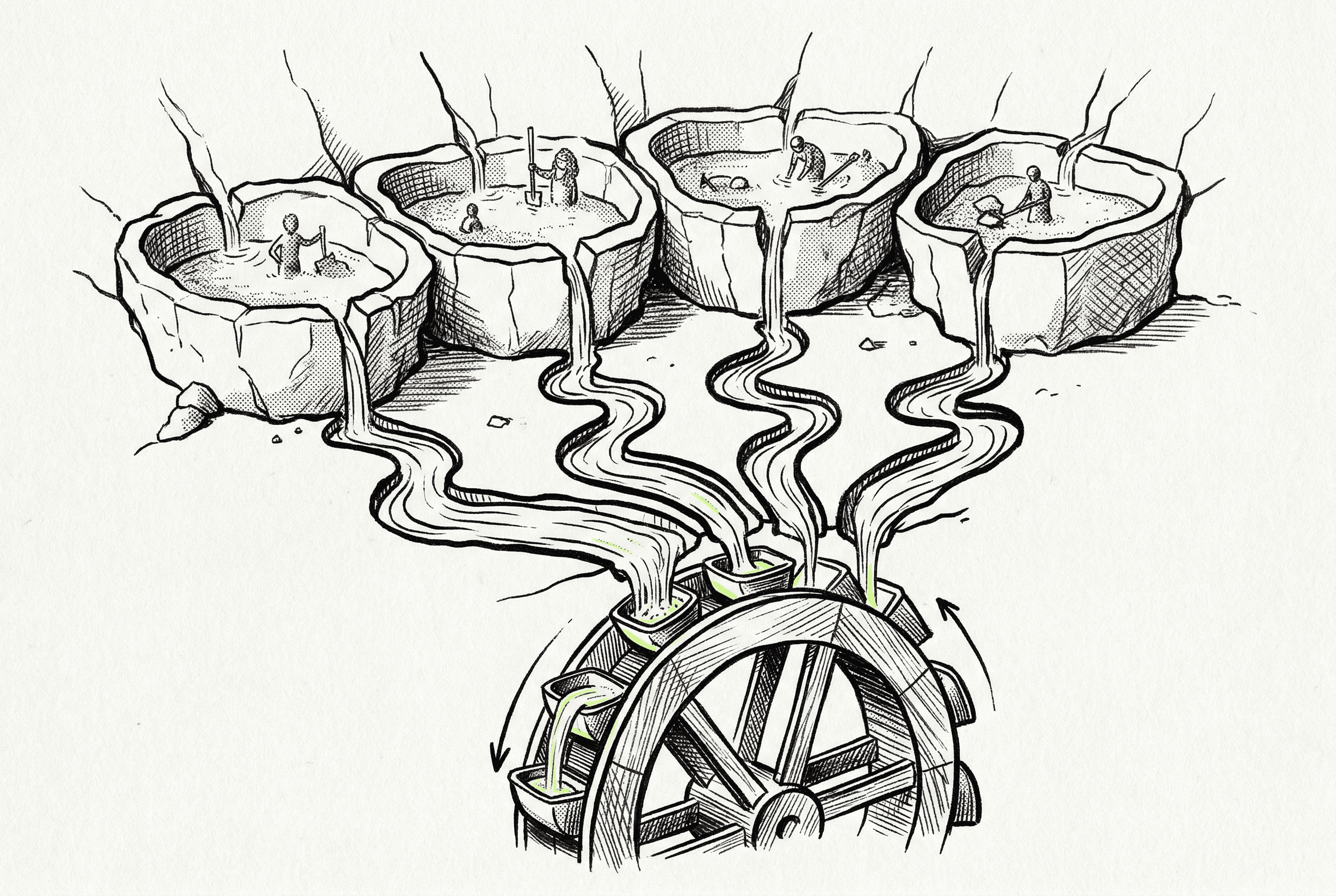
Batch processing capabilities are isolated per tenant to prevent the noisy neighbor problem. By segmenting queue backlogs per account, scheduling remains fair regardless of how many queues a specific high-volume user spins up. The upgrade moves the platform away from easily exhausted shared resources toward guaranteed operational throughput.
The system abandons a single, flat master queue in favor of a . Instead of evaluating thousands of individual queues across the platform, the first queries a list of active tenants, allocates processing time proportionately, and then pulls tasks from their specific queues.
When messages are enqueued or released, they register to a , which subsequently updates a shard-level tenant index via atomic . The deployment runs the legacy master queue in a drain-only state alongside the new routing logic until all older tasks are cleared.